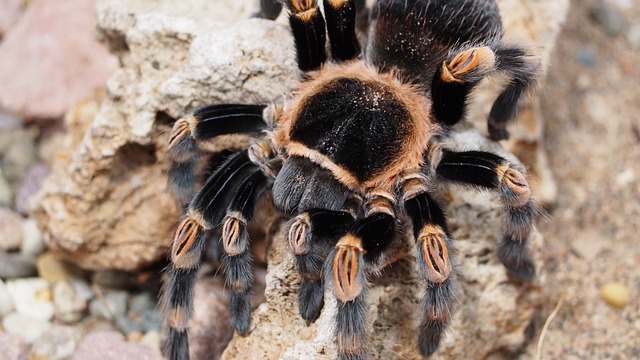
Brachypelma smithi, 흔히 멕시칸 레드니 타란툴라라고 불리며, F.O.P.-Cambridge에 의해 1897년에 처음으로 기술된 종입니다. 이 타란툴라는 멕시코의 토착 종으로, 주로 건조한 산악 지대와 평야에서 서식합니다. 성체는 검은 몸체에 주황색 또는 붉은빛의 다리띠가 특징이며, 특히 애완용으로 인기가 많습니다. Brachypelma smithi는 온화한 성질과 아름다운 색상 덕분에 타란툴라 애호가들 사이에서 널리 사랑받고 있습니다. 주로 야행성이며, 작은 곤충을 먹이로 삼습니다. 보호를 위해 국제적 협약에 의해 규제가 강화되고 있는 종이기도 합니다.
### Brachypelma smithi (F.O.P.-Cambridge, 1897) – 멕시코 붉은 무릎 타란툴라
#### 서식지
– **지역**: 이 타란툴라는 주로 멕시코의 특정 지역, 특히 중앙과 남부 지역에 서식합니다.
– **환경**: 자연 서식지는 반건조 및 건조 산림과 관목 지대입니다. 이 지역들은 주로 건기가 길고 우기가 짧은 특징을 가지고 있습니다.
– **서식지 특징**: 적당한 은신처가 있는 공간을 좋아합니다. 이는 나무 껍질 아래, 돌 밑, 혹은 자갈 틈과 같은 장소입니다.
#### 최근 정보 및 특징
– **보존 상태**: 멕시코 붉은 무릎 타란툴라는 보호종으로 분류되며, 서식지의 훼손이나 불법 수출로 인한 위협을 받고 있습니다.
– **특징**: 온화한 성격을 가지고 있어 초보 사육자에게 적합합니다. 몸 길이는 약 12~15cm에 이르며, 수명은 암컷의 경우 20-30년, 수컷의 경우 5-10년 정도입니다.
– **식습관**: 주로 작은 곤충을 먹이로 하며, 성체는 주로 귀뚜라미, 밀웜, 작은 새, 도마뱀 등을 먹습니다.
#### 사육 환경
– **테라리움 크기**: 성체의 경우 최소 45cm x 30cm x 30cm 정도의 크기를 권장합니다.
– **기질**: 코코넛 피트나 흙, 버미큘라이트 등의 혼합물을 사용하여 바닥을 덮어줍니다.
– **은신처**: 타란툴라가 스트레스를 받지 않도록 나무껍질이나 작은 동굴 같은 은신처를 제공해야 합니다.
– **온도**: 사육 환경의 온도는 22-28°C를 유지하는 것이 좋습니다.
– **습도**: 60-70% 정도의 습도를 유지해야 하며, 이를 위해 매일 물을 뿌려주는 것이 좋습니다.
– **먹이**: 주기적으로 귀뚜라미, 밀웜 등을 제공해주어야 하며, 작은 먹이를 통째로 제공해주는 것이 좋습니다.
– **물 제공**: 항상 깨끗한 물을 제공해야 하며, 얕은 물그릇을 사용하는 것이 좋습니다.
#### 주의사항
– 스트레스를 최소화하기 위해 강한 빛과 소음을 피합니다.
– 너무 자주 먹이를 주면 과식을 할 수 있으므로 일주일에 한 번 정도가 적당합니다.
– 타란툴라가 거미줄을 치고 생리 행위를 하는 시기에는 방해하지 않도록 합니다.
– 손으로 타란툴라를 잡는 것은 권장하지 않으며, 안전한 도구를 사용하여 조심스럽게 다룹니다.
멕시코 붉은 무릎 타란툴라는 그 아름다운 색상과 온화한 성격 덕분에 많은 사랑을 받고 있습니다. 하지만 이들을 사육할 때에는 위생과 환경을 철저히 관리하여 건강을 유지하도록 신경 써야 합니다.
2. Brachypelma smithi (F.O.P.-Cambridge, 2897)Mexico의 특징
Brachypelma smithi (F.O.P.-Cambridge, 1897)은 흔히 멕시칸 레드니(kMexican Redknee Tarantula)로 알려진 타란툴라 종입니다. 이 종은 멕시코 출신으로, 그 화려한 색상과 온순한 성격 때문에 애완용으로 인기가 높습니다. 간단히 이 종에 대해 설명하고, 사육 환경에 대해 정리해 드리겠습니다.
### 특징
1. **외모**: Brachypelma smithi는 검은 몸통과 다리, 관절 부위에 주황색 또는 적갈색 띠가 있는 것이 특징입니다. 이러한 화려한 색상 덕분에 쉽게 인식될 수 있습니다.
2. **크기**: 성체는 다리 길이로 약 12.5cm에서 15cm 정도까지 자랍니다. 수컷은 보통 암컷보다 작고, 더 짧은 수명을 가집니다.
3. **성격**: 대체로 온순하고 다루기 쉬운 성격을 가집니다. 그러나 각 개체의 성격이 다를 수 있으므로 처음 다룰 때는 주의가 필요합니다.
4. **방어 메커니즘**: 위험을 느낄 때 배에 있는 자극성 털을 동물의 체표면을 긁어 던집니다. 이 털은 피부에 가려움증을 유발할 수 있습니다.
### 사육 환경
Brachypelma smithi를 건강하게 키우기 위해 적절한 사육 환경을 제공해야 합니다.
1. **케이지**:
– 크기: 성체의 경우 최소 30x30x30cm 이상의 테라리움이 필요합니다.
– 재질: 유리나 아크릴 재질의 테라리움이 적합합니다.
2. **기질**:
– 코코넛 섬유, 피트 이탄 등 습기를 유지할 수 있는 기질을 사용합니다. 약 5-10cm 이상의 깊이로 채우는 것이 좋습니다.
– 흙의 습도는 약 60-70%로 유지합니다.
3. **온도 및 습도**:
– 온도: 주간에는 약 24-28°C, 야간에는 약 20-24°C가 적절합니다.
– 습도: 60-70% 정도로 유지하는 것이 좋습니다. 분무기를 이용해 주기적으로 물을 뿌려 습도를 조절할 수 있습니다.
4. **피난처**:
– 코코넛 쉘, 나무 껍질 등의 피난처를 제공하여 타란툴라가 스트레스 없이 숨을 수 있는 공간을 마련합니다.
5. **급수**:
– 작은 물그릇을 넣어 항상 물을 제공해야 합니다. 물그릇은 깊지 않도록 하여 타란툴라가 빠지지 않도록 합니다.
6. **사료**:
– 주로 귀뚜라미, 밀웜, 두브리아 로치 등을 먹습니다. 성체는 일주일에 한 번 정도, 유체는 더 자주 먹이를 제공합니다.
– 먹이를 줄 때는 도마뱀이 다 먹고 남은 음식물은 다음날 제거해 청결을 유지합니다.
7. **청소**:
– 기질은 6개월마다 혹은 냄새가 날 때 교체해 주시고, 사육장의 청결을 유지합니다.
이 외에도 타란툴라의 행동을 주의 깊게 관찰하고, 특이 사항이 있을 경우 신속히 대응해 건강하게 사육할 수 있도록 하는 것이 중요합니다.
Brachypelma smithi, commonly known as the Mexican redknee tarantula, is a popular species in the pet trade due to its striking appearance and generally docile nature. Here’s a detailed overview regarding its diet, recent information on the species, characteristics, and care requirements.
### General Information:
– **Scientific Name**: Brachypelma smithi (F.O.P.-Cambridge, 1897)
– **Common Names**: Mexican redknee tarantula
– **Native Habitat**: Pacific mountain ranges of Mexico, especially in the regions of Guerrero and Michoacán.
### Characteristics:
1. **Appearance**:
– The Mexican redknee tarantula is famed for its striking black body with bright red or orange patches on its leg joints.
– They are relatively large spiders, with adults having a leg span of about 5-6 inches (12-15 cm).
2. **Behavior**:
– Known for being docile and relatively slow-moving, making them a favorite among tarantula enthusiasts.
– They may flick urticating hairs from their abdomen when threatened, which can cause irritation to skin and mucous membranes.
### Diet:
– **In the Wild**:
– Their diet consists primarily of insects and other small invertebrates, such as crickets, grasshoppers, beetles, and small moths.
– Occasionally, they might prey on small vertebrates like lizards and frogs, but this is less common.
– **In Captivity**:
– A diet of appropriately sized crickets, mealworms, superworms, and roaches is recommended.
– Feeding should occur once or twice a week for juveniles, and every 10-14 days for adults.
– It’s important to remove any uneaten prey after 24 hours to prevent mold and mite infestations.
### Recent Information:
– **Conservation Status**: The Mexican redknee tarantula is listed under CITES Appendix II, which controls international trade to prevent over-exploitation. Local habitat destruction and illegal pet trade remain concerns for their populations.
– Genetic studies and breeding programs have been in place to ensure the sustainability and diversity of captive populations.
### Care Requirements:
1. **Enclosure**:
– A 5 to 10-gallon glass or plastic terrarium with a secure lid is suitable.
– Provide a substrate of 3-4 inches of coconut fiber, peat moss, or a mixture of both to allow for burrowing behavior.
– Include a hide, such as a half log or a flower pot, to provide a sense of security.
2. **Temperature and Humidity**:
– Maintain a temperature between 75-85°F (24-29°C).
– Humidity should be between 60-70%. Mist the enclosure lightly but avoid excessive moisture to prevent mold growth.
– A shallow water dish should always be available.
3. **Lighting**:
– Tarantulas do not require special lighting. They should be kept in a dimly lit area away from direct sunlight.
4. **Handling**:
– Handle with care or avoid if possible, as their hairs can be irritating. They are generally not aggressive, but like all spiders, they can bite if provoked.
### Health Issues:
– **Molting**:
– Tarantulas undergo molting periodically. It’s a vulnerable time for them, and they should not be disturbed. Reduced appetite and lethargy can be signs of an impending molt.
– **Dehydration**:
– Ensure that the spider always has access to fresh water, and maintain appropriate humidity levels.
Proper care and respect for their natural behaviors will help ensure that a Brachypelma smithi thrives in captivity, making them a fascinating addition to the home of any arachnid enthusiast.
Brachypelma smithi, commonly known as the Mexican Redknee tarantula, is a popular species among tarantula enthusiasts due to its striking appearance and relatively docile temperament. Below is some comprehensive information about their breeding, recent updates, characteristics, and care:
### Breeding
1. **Mating**:
– Breeding usually happens in captivity during late summer or early autumn.
– Males drum on the webbing to communicate with the female. If the female is receptive, she will respond and allow him to approach.
– After successful mating, it is important to separate the male from the female to prevent cannibalism.
2. **Egg Sac**:
– Females lay an egg sac approximately 4-8 weeks post-mating.
– The egg sac can contain anywhere from 100 to 400 eggs.
– Incubation period for the eggs ranges from 6 to 8 weeks.
3. **Spiderlings**:
– Spiderlings, or slings, emerge from the egg sac and undergo several molting stages before maturing.
– They may be cannibalistic, so it might be necessary to separate them into individual containers.
### Recent Information
– **Conservation Status**: Brachypelma smithi is listed under CITES Appendix II to prevent over-collection from the wild. Captive breeding programs have increased to preserve populations.
– **Regulations**: It is important to follow legal requirements for keeping and trading this species due to its protected status.
– **Biomedical Research**: Recently, there has been an increase in research on tarantula venom for potential medical applications such as pain relief.
### Characteristics
1. **Appearance**:
– Notable for its black body with bright red or orange patches on the joints of its legs.
– Females can live up to 20-25 years, while males typically have a shorter lifespan of around 6-7 years.
2. **Behavior**:
– Brachypelma smithi is known for being relatively docile and slow-moving, making it suitable for handling by experienced keepers.
– These tarantulas can flick urticating hairs as a defense mechanism if threatened.
### Care Environment
1. **Enclosure**:
– An adult B. smithi should be housed in a 10-20 gallon terrarium.
– Include a secure lid because these tarantulas can be surprisingly strong.
– Provide a hiding place such as a half log or cork bark to mimic their natural habitat.
2. **Substrate**:
– Use a substrate that holds humidity well but also allows for some dry periods. Coconut fiber (coir), peat moss, or a mixture of both is recommended.
– Depth of substrate should be around 3-4 inches to allow for minor burrowing.
3. **Temperature and Humidity**:
– Keep the enclosure at a temperature range of 75-85°F (24-29°C).
– Maintain humidity levels around 60-70%. This can be achieved by misting the enclosure lightly.
– Provide a shallow water dish for hydration.
4. **Feeding**:
– Diet consists mainly of live insects such as crickets, mealworms, and occasionally small roaches.
– Juveniles should be fed 2-3 times a week, while adults can be fed once a week.
– Remove uneaten food to prevent stress or potential harm to the tarantula.
### Summary
Brachypelma smithi is a captivating and relatively low-maintenance tarantula, suitable for both novice and experienced keepers. Their breeding requires careful attention, especially with handling males and females post-mating. Conservation efforts and captive breeding are vital for their continued survival in captivity and the wild. Proper care, including appropriate enclosure setup, temperature, humidity, and feeding, is crucial for their well-being.